


The Greener Home Guide: Making Your Home More Sustainable
Creating a home that’s eco-friendly and energy-efficient can seem like a big endeavour, especially if you’re not sure where to start. The good news? Just by showing an interest, you’ve already taken the first step. Small, smart changes today can lead to big improvements over time.
In this guide, we’ll explore ways to shrink your home’s environmental footprint and save money on your energy bills at the same time.
Contents:
- What is Green Plumbing?
- What are Low-Flow Fixtures?
- How do you Choose Water Efficient Appliances?
- What are Hybrid Boilers?
- What is a Hydrogen Boiler?
- Energy Efficient Heating Systems
- How to Bring Renewable Energy into Your Home
- How to Be More Sustainable at Home – Practical Tips
Green Plumbing and Heating Systems
Green plumbing and heating systems deliver the same results as less efficient alternatives, but use fewer resources (energy, water, fuel). They are often cheaper to run too, a win win for both the planet and your wallet.
What is Green Plumbing?
‘Green plumbing’ technologies and practices use less water and energy to run plumbed-in appliances, such as toilets, showers, taps, and dishwashers. The aim is to minimise the environmental impact everyday household tasks have.
Here are some examples of green plumbing in the home:
Low-Flow Fixtures
‘Low-flow’ fixtures can be fitted to showerheads, taps, and toilets, so that less water passes through the appliance. The fixtures either restrict water flow or mix water with air (known as ‘aerating’) so less water is needed to create the same pressure. Sometimes, aerating can even lead to improved pressure.
How to Choose Low-Flow Fixtures?
- Low-Flow Showerheads: You can buy a flow rate restrictor for your existing showerhead. Restrictors are simple components that go between the showerhead and the hose. Their aim is to reduce the ‘flow rate’ of your shower to 2.0 gallons per minute (GPM) or less.
- Low-Flow Taps: Similar to showerheads, you can add restrictors to your taps. A good flow rate for a bathroom tap is between 1 and 1.5 GPM. For kitchen taps it’s around 1.5 – 2.2 GPM.
- Toilets: Low-flow toilets typically use either a gravity flush or power flush system. Gravity toilets rely on the natural force of gravity to siphon away waste, while power flush models use pressurised air to push waste down the pipes. Upgrading to either option usually requires installing a new unit. When choosing a model, look for toilets that use 1.28 gallons per flush or less.
Dual flush toilets offer two flushing options: one for liquids and another for solid waste. Both gravity and power flush systems can include a dual-flush valve, making them even more efficient and water-saving.
How to Know if You Have Low-Flow Fixtures?
It’s possible to test the fixtures in your home by timing how long it takes to fill a 1-litre jug. If it takes longer than 6 seconds, you likely have low-flow. You can also check for aerators on your taps — they look like small attachments near the spout, usually circular in shape, and can be made of metal or plastic.
Water-Efficient Appliances
Large appliances can use gallons of water every day, especially in a busy household. In fact, washing machines often consume more water than showers or toilets. Here are a few tips for choosing water-efficient appliances:
How to Find Water-Efficient Appliances?
- Understand the Labels: Appliances now come with an EU energy label. This uses a scale from A to G, with ‘A’ being the most efficient.
- Don’t Buy Too Big: Appliances like washing machines come in different sizes and their capacity affects how much water they use. Models with larger drums typically require more water per cycle than smaller ones. That’s why it’s best to choose an appliance that matches your household’s actual needs.
- Modern Innovation: Many of today’s products are designed with water efficiency in mind. Hot water recirculation systems, for instance, quickly deliver warm water to taps and showerheads, so you don’t waste water waiting for it to heat up.
Toilets have also become far more efficient. Older gravity flush models can use 3.5 gallons or more per flush, while newer versions use 1.6 gallons or less. Power flush toilets are even more efficient, using as little as 1 gallon per flush.
Switching to water-efficient appliances can be done gradually. For example, when an old showerhead has had its day, and you’re already looking to replace it. There’s no need to replace everything at once.
What are Hybrid Boilers?
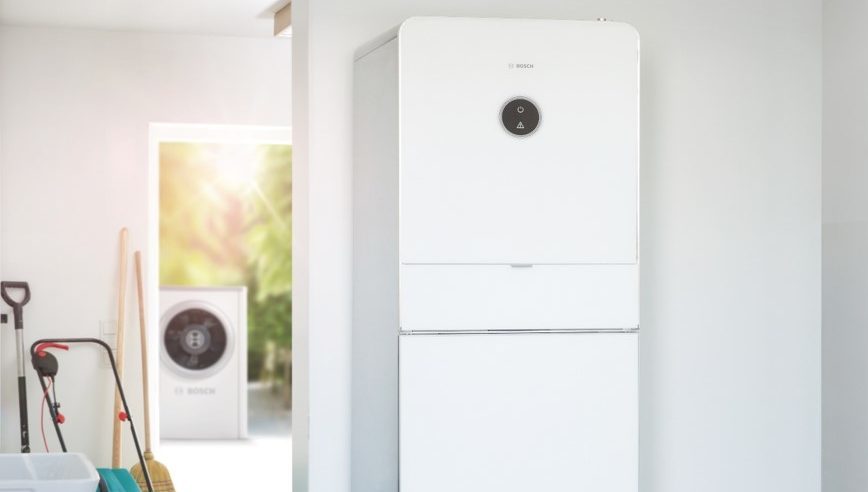
A Hybrid Boiler, as the name suggests, combines two heating methods: a traditional energy source (such as gas or electricity) and a heat pump. It can switch between the two, diverting to the more environmentally friendly option — the heat pump — 80% of the time. This means Hybrid Boilers can reduce carbon emissions, compared to more traditional models, and save homeowners money in the long run.
Reach out to us, if interested in renewable energy and greener systems.
What is a Hydrogen Boiler?
An emerging technology, Hydrogen Boilers run on Hydrogen gas. Hydrogen gas can produce the same amount of heat as natural gas — using less fuel. Once Hydrogen Boilers are readily available to homeowners, they are expected to help cut energy bills.
Energy-Efficient Heating Systems
Heating systems that run on less energy help homes to be more eco-friendly. If you’re hoping to save on heating bills and reduce your energy use, here are some options:
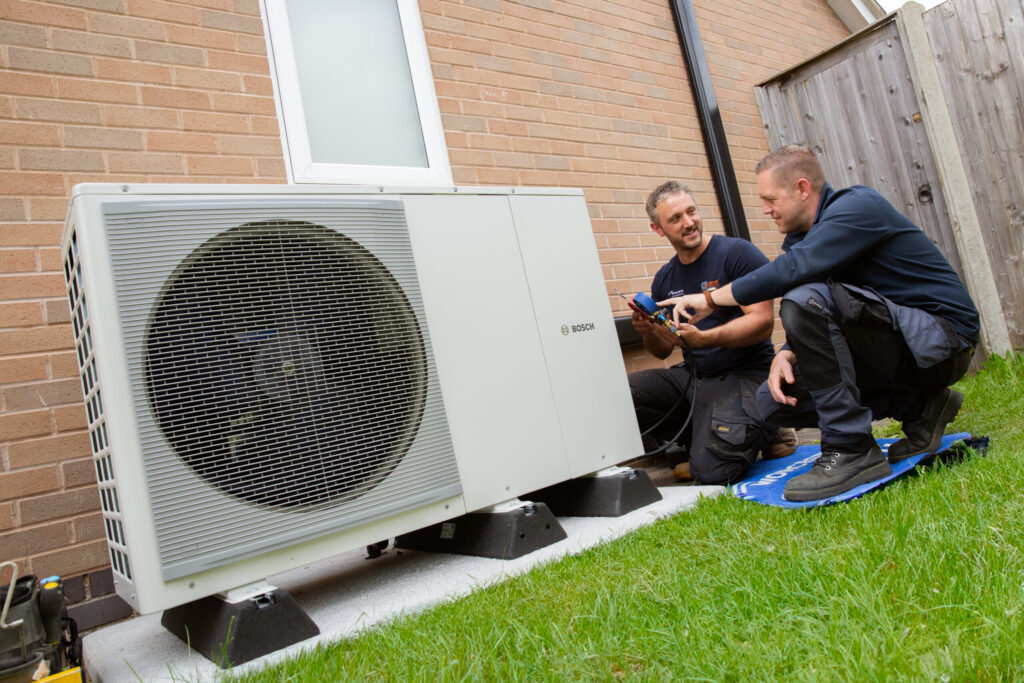
Heat Pumps extract warmth from the air, ground, or water and use that warmth to heat up hot water for the home. Air Source Heat Pumps take heat from the air, while Ground Source Heat Pumps use the ground to create warmth.
Smart Thermostats let you know how much energy you’re using at any given point in the day and how much it is costing you. So, you can make smart decisions, like turning down the heating before heading out.
Proper Insulation and Sealing helps prevent heat from escaping through windows, doors, or walls that aren’t well insulated. For example, single-glazed windows or neglected lofts that need new insulation.
Regular Maintenance: Keep your appliances and boiler well serviced and upgrade faulty or outdated models that could be wasting energy.
How to Bring Renewable Energy into Your Home
Renewable energy sources — the sun, wind, ground heat — are naturally replenished. These sources are available whether they’re used to heat and power homes or not. This makes them a great way to be more eco friendly at home. Here are the main renewable energy options available to homeowners:
1. Solar Power
The heat of the sun can be converted into electricity for your home through Solar Photovoltaic (PV) Technology. It doesn’t have to be a sunny day for the panels to collect rays, although they do produce more power on sunny days. The energy they generate is stored in batteries, so you can use it at all hours of the day. Excess power you don’t use can even be sold into the national electricity grid — see the UK Government’s Smart Export Guarantee (SEG).
2. Solar Thermal
Solar Thermal is a type of solar technology designed to heat your water — and even your central heating — using the power of the sun. The panels are usually installed on your roof to soak up as much sunlight as possible during the day. The energy they collect is then used to warm your water, all without producing any harmful emissions. It’s a simple, sustainable way to cut down on energy bills while reducing your home’s carbon footprint.
3. Wind Energy
Wind Turbines aren’t just for large offshore farms or wide-open countryside. Smaller, domestic versions can be mounted on rooftops, attached to parts of a home, or installed on a standalone pole in your garden. As the wind turns the blades, it drives an internal turbine that generates electricity for household use.
How to Run a More Sustainable Home:Tips and Advice
Creating a more sustainable home doesn’t have to mean major changes or expensive upgrades. Here are some practical tips to help you run a more eco-friendly home, one step at a time.
- Switch to LED lighting: This uses up to 80% less energy than traditional bulbs.
- Unplug unused electronics: Standby power still uses energy. This is known as “phantom load” or “standby power.”
- Wash clothes at 30°C: Lower temperatures still clean effectively and save electricity.
- Dry clothes naturally: Use a clothesline or airer instead of a tumble dryer when possible.
How Can We Help?
Interested in our eco-friendly plumbing and heating solutions? Our Gas Safe‑registered engineers can install and service a range of renewable heating solutions, including air‑source and ground‑source heat pumps, hybrid boilers, solar photovoltaic (PV), and solar thermal systems. Each installation comes with a 10‑year guarantee, and ongoing maintenance plans to help you to maintain optimal system efficiency over time.
You might also be eligible for UK Government support grants and financial incentives, available for UK homeowners swapping to renewable heating systems, such as Heat Pumps and Solar Thermal Heating.
We’re also on hand to service your boilers and appliances, so they keep running efficiently.
We can give you a quote right away or provide you with more information. Our fully accredited plumbers and electrical engineers have experience in helping domestic and commercial properties take steps forward in their sustainability. Give us a call or book a consultation online today.
FAQs About Going Greener at Home
Still wondering how to be more eco-friendly at home? Find the answers to more commonly asked questions…
Should I switch to low-flow fixtures?
For most homes, switching to low-flow fixtures is an easy, effective way to save water, energy, and money. Low-flow fixtures are affordable and can be fitted quickly, without major plumbing changes. Some models can even improve water pressure, thanks to ‘aerators’ that mix the water with air.
Do appliances still use electricity when plugged in but not in use?
Yes, many appliances still use electricity when plugged in but not actively in use. This is often called ‘standby power’ — aka a part of the device is still on ‘standby’ for when you might need it. Over time, this adds up, both in energy use and costs, so it’s a good idea to unplug devices you’re not using. Common electricals that remain plugged in and on standby are: TVs and sound systems (especially with remotes), games consoles, computers, printers, and monitors, phone and laptop chargers (even without the device plugged in!), and kitchen appliances, such as microwaves with digital clocks.
Why is LED lighting good?
LEDs use less electricity than traditional bulbs, because they convert more energy into light (not heat), making them highly efficient. This means switching to LEDs can noticeably reduce your electricity costs, especially in homes with lots of lighting.