Which appliances use the most electricity in UK homes? From air fryers to kettles
03rd Feb 20268 minute read
Lincoln Smith
From air fryers to fridges, some appliances consume more electricity than others. Knowing which electrical appliances use the most power means you can take control of your bills and make smart switches.
In this guide, we look at the appliances that use the most electricity and, therefore, cost the most to run. We’ll also give you some tips to limit your reliance on high-energy appliances.
At a glance:
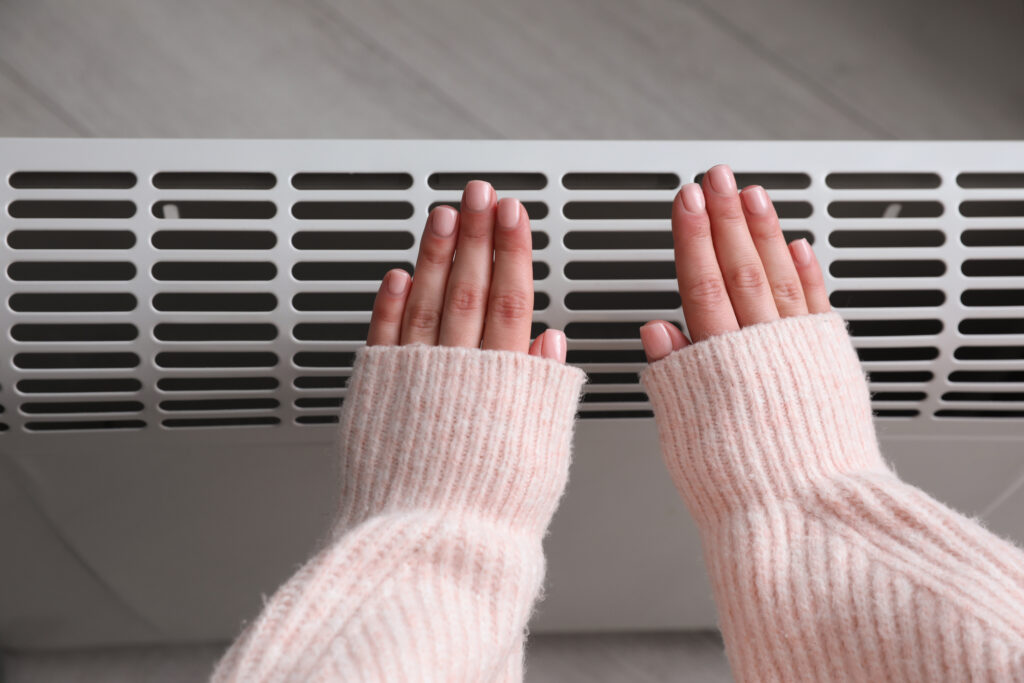
Electric heating systems are often the single biggest electricity users in UK homes, especially during winter.
Tumble dryers also use intense heat and long cycles, making them one of the most expensive appliances to run.
Always-on appliances (fridges,freezers) constantly use energy
Dehumidifiers, electric ovens and kettles are also among the most expensive appliances to run
How is electricity use measured?
Electricity usage is measured in kilowatt-hours (kWh). The more powerful the appliance and the longer it runs, the more it costs to operate.
For example, a 2 kW kettle used for 10 minutes daily consumes around 0.33 kWh per day. Multiply that by 30 days, and you get roughly 10 kWh per month. With the current UK electricity price averaging around 35p per kWh, that’s about £3.50 per month just to boil water!
“When picking appliances based on kWh usage, you’re essentially evaluating energy efficiency and long-term operating costs, not just the upfront price. Look for official energy ratings on the energy label of the applicance, such as Energy Star, EU Energy Label, or local certifications.”
David Jackson, Electrical Manager / Surveyor at Custom Heat
What appliances use the most electricity?
In the kitchen…
Fridges
Fridges run 24 hours a day, making them one of the most consistent electricity users in the home.
Estimated cost: Around £1.00–£1.50 per day, depending on size, age and efficiency rating.
Older or poorly sealed fridges can be among the most expensive appliances to run without homeowners realising.
Fridge-freezers (combined unit)
Combined fridge-freezers are common in UK homes and contribute greatly to electricity usage.
Estimated cost: Around £1.00–£1.70 per day, or £30–£50 per month.
Kettles
Kettles are small but powerful. With an average power rating of 2–3 kW, boiling water is surprisingly energy-intensive.
Estimated cost: Boiling 1 litre per day costs roughly 15p–20p per week.
Boiling only the amount of water you need can save both electricity and money.
Microwaves
Microwaves are convenient. But frequent use adds up.
Estimated cost: Around £0.05 per day when used for 10 minutes.
Ovens & hobs
Traditional electric ovens are among the most energy-hungry kitchen appliances, often running at 2–3 kW for extended periods (especially when roasting or baking).
Estimated cost: Around £1.00–£1.60 per use (1–1.5 hours).
Induction hobs are more efficient but can still contribute to electricity costs if used frequently.
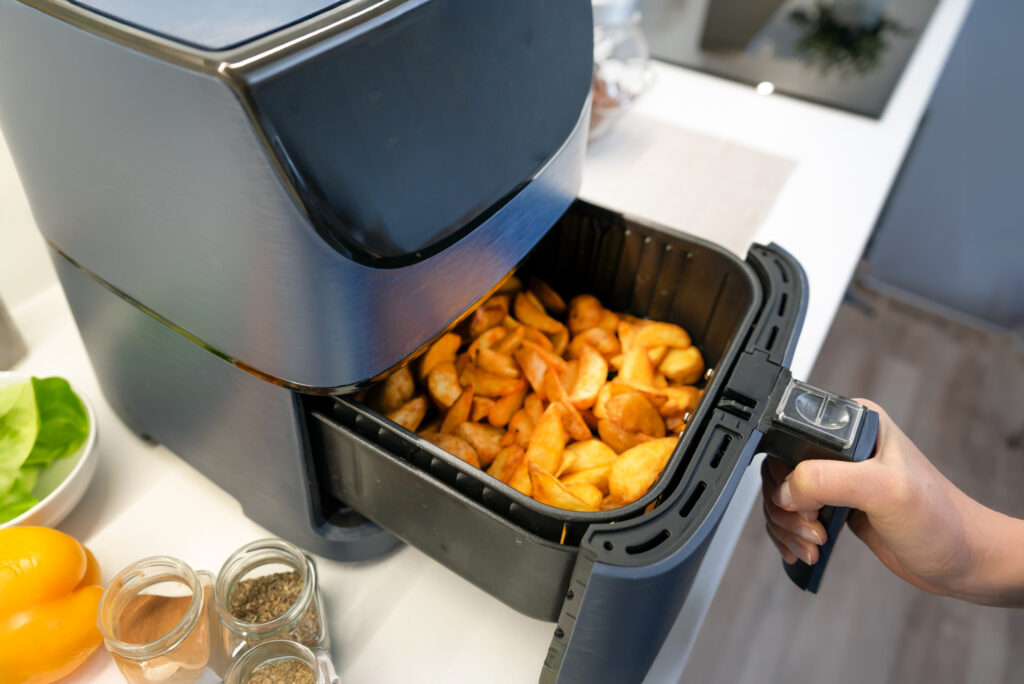
Air fryers
Air fryers use less electricity per cooking session than ovens. Their compact size means they cook faster. Still, frequent frying can add up, especially with high-wattage models (1.5–2 kW).
Estimated cost: Around £0.25–£0.40 per day with regular use.
Laundry, utility and cleaning appliances…
Washing machines
Energy use depends on temperature settings and run cycles.
Estimated cost: Around £0.35–£0.70 per wash, higher for hot cycles.
Cold washes are one of the easiest ways to cut electricity costs.
Tumble dryers
Tumble dryers use intense heat and long cycles, making them one of the most expensive appliances.
Estimated cost: Around £0.80–£1.00 per cycle.
Air-drying is a much better solution, if possible.
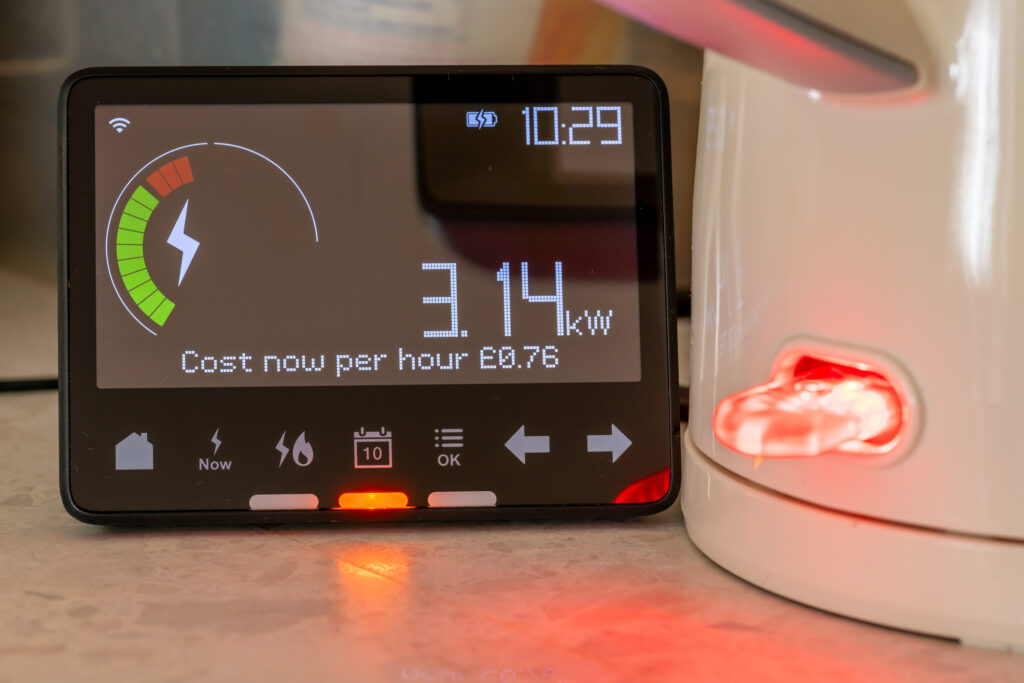
Small appliances like these typically cost £0.10–£0.50 per use. But frequent daily use adds up. Having a smart meter helps keep an eye on things.
Tech and electronic gadgets that use the most electricity
Television
Modern LED TVs are relatively efficient, but larger screens and long viewing hours increase energy use.
Estimated cost: Around £0.10–£0.25 per day with 4–6 hours of viewing.
Older plasma TVs can cost significantly more to run.
Laptops
Laptops are among the most energy-efficient household devices.
Estimated cost: Around £0.02–£0.05 per day, even with several hours of use.
Desktop computers
Desktop PCs, especially gaming or high-performance models, use far more power than laptops.
Estimated cost: Around £0.15–£0.40 per day, depending on usage.
Phone chargers
Charging a phone uses very little electricity. But leaving chargers plugged in contributes to ‘phantom’ energy use.
Estimated cost: Around £1–£2 per year per charger.
Individually small, but multiple chargers left plugged in build up over time.
Routers, smart speakers, consoles on standby
Devices left on standby draw small amounts of ‘phantom’ power.
Estimated cost: Around £20–£40 per year combined in an average home.
Standby power is often overlooked when people ask what uses the most electricity in a house.
A side-by-side comparison of how much power electrical appliances us
Appliance
Average Power (kW)
Typical Daily Usage
Daily kWh
Monthly Cost (£)*
Electric heater / fan heater
1–3 kW
5 hours
5–15 kWh
£1.75–£5.25
Tumble dryer
2.5 kW
1 hour
2.5 kWh
£0.88
Electric oven
2–3 kW
1.5 hours
3–4.5 kWh
£1.05–£1.58
Fridge/freezer
0.1–0.2 kW (continuous)
24 hours
2.4–4.8 kWh
£0.84–£1.68
Washing machine (hot wash)
1–2 kW
1 cycle/day
1–2 kWh
£0.35–£0.70
Dishwasher
1–1.5 kW
1 cycle/day
1–1.5 kWh
£0.35–£0.53
Kettle
2–3 kW
10 mins/day
0.33–0.5 kWh
£0.12–£0.18
Microwave
1.2 kW
10 mins/day
0.2 kWh
£0.07
Dehumidifier
0.3–0.8 kW
8 hours
2.4–6.4 kWh
£0.84–£2.24
Air fryer
1.5–2 kW
30 mins/day
0.75–1 kWh
£0.26–£0.35
Practical tips to reduce electricity use
If you’re worried about your electricity use, here are some tips.
Unplug idle devices
Cook efficiently: Use lids, batch cook, and cook with an air fryer if it makes sense
Switch to low-temperature washes. Washing at 30°C instead of 60°C can halve energy use
Switch to energy-saving LED lights
Insulate your home and block off draughts
Air-dry clothes when possible
Heat the person not the room. Think warm layers or hot water bottles
Upgrade old appliances. Modern devices are often more energy-efficient
Use timers and smart plugs to avoid leaving things on all the time
Understanding which UK appliances use the most electricity is key to controlling energy bills and reducing your carbon footprint. Read more advice about running a green home.
FAQs about which appliances use the most electricity
What appliances use the most electricity in a home?
Appliances that produce heat or run for long periods use the most electricity. These include electric heaters, tumble dryers, ovens, fridge-freezers and dehumidifiers.
What uses the most electricity in a house overall?
Heating-related appliances typically use more power, followed by appliances that run constantly, such as fridge-freezers and freezers.
Are air fryers cheaper to run than ovens?
Yes. Air fryers typically use less electricity than traditional ovens because they heat up faster and cook food faster.
Do fridges and freezers use a lot of electricity?
Individually, fridges and freezers don’t use large amounts of power at any one time. But because they run 24/7, they are among the biggest contributors to overall electricity use.
How much electricity do TVs and laptops use?
Modern TVs and laptops are relatively energy efficient. However, long daily use and multiple devices in one household can rack up.
Do phone chargers use electricity when not in use?
Yes. Phone chargers left plugged in still draw small amounts of electricity, known as ‘standby’ – or ‘phantom’ – power. While the cost is low individually, multiple chargers make a difference.
What uses the most energy in your home during winter?
During winter, electric heating, tumble dryers, dehumidifiers and longer lighting hours mean more electricity use.
When high energy use signals a problem
If your electricity bills remain high despite being careful, it could indicate:
Inefficient heating systems
Poor insulation
An outdated or poorly performing boiler
Over-reliance on electric heaters
Upgrading or servicing your heating and electrical systems can significantly reduce energy use and improve comfort. Regular boiler servicing and professional electrical checks help your home run efficiently and avoid energy waste.